
Starting With Purpose
Using learning contracts to support students in a specifications graded course


Tai Munro is an Assistant Professor of Sustainability Studies at MacEwan University, Alberta, Canada. She uses specifications grading in all of the sustainability classes and has mentored multiple contract instructors to enable them to adopt the approach when teaching the introduction to sustainability course as well. Tai holds a PhD in Education and has worked both as an instructional designer and educational developer in the past.
I teach a course called Introduction to Sustainability at MacEwan University. The course is an elective that is taken by students from across the institution and working professionals at any stage of their education. The course is online, asynchronous. This adds up to a highly diverse student body, not only in their demographics but also in their university experience.
The course uses a specifications grading system that largely follows Linda Nilson’s framework: individual assignments are scored as either Complete or Needs Revisions based on the requirements, which are aligned with the learning outcomes, and final course grades are determined by a bundling system.
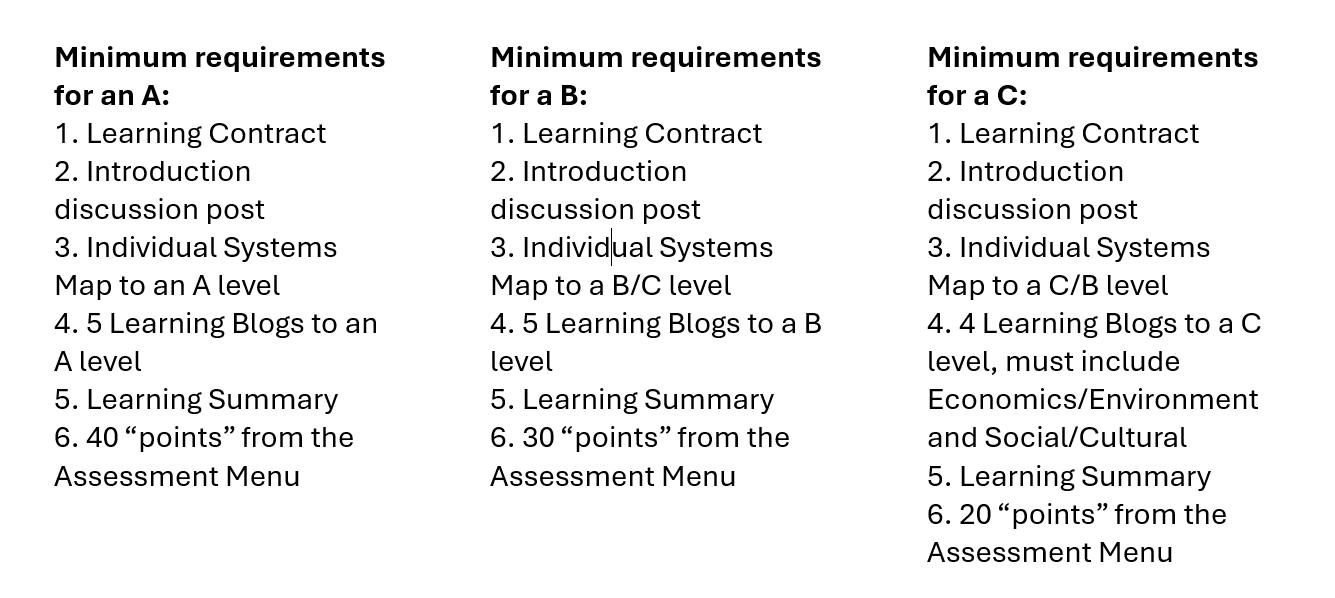
All grades need to demonstrate competence in key learning outcomes. For example, the systems map is aligned with a learning outcome about using systems thinking as a framework for sustainability challenges. The learning blogs ask students to examine key principles of sustainability and apply different approaches to sustainability. “A”-level work involves connecting with classmates and the student’s community outside of the course. The way I describe specifications grading is that everyone aims to produce the same high quality of work, but you complete more or less of it depending on your target grade.
Another feature of the introductory course is something that I call the assessment menu. There are assignments that everyone needs to complete. But then there are menu assignments divided into appetizers, soups and salads, and entrees based on the amount of work involved. As shown in the bundles, each grade requires a certain number of “points” from the assessment menu. The points language is a short-hand to help students understand that the categories (the appetizers, etc.) are different sizes and that they can mix and match to make their total required points.
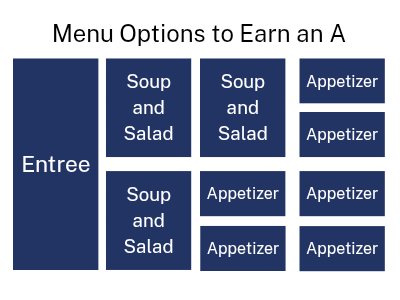
The entree gives students the opportunity to do a deep dive into a topic of interest or even create a proposal for a meaningful sustainability project to an external party, often their workplace. Soups and salads are moderate sized assignments. Current options focus on investigating current news stories or completing a personal action project like setting up a backyard composter or volunteering with a food bank and reflecting on their experience. The appetizers are the most diverse ranging from engaging with actions for Truth and Reconciliation like finding and listening to Indigenous musicians or developing a personal land acknowledgement to investigating companies to see what their sustainability related practices are. The deadlines vary depending on the category and focus topic. This approach provides an opportunity for students to pursue assignments they are truly interested in and focus on deadlines that fit within the schedules for their major courses and their lives. At the same time, it can be a little overwhelming until the students understand that they have choices and will not be completing all of the options.
Starting the Course On Track
In my introduction to the course, I tell the students that I believe anyone can earn an A, but that they need to decide what grade they’re going to target based on what else they have going on in their lives. Because part of the differentiation between grades is specific to certain assignments it is easier to drop down a target grade than increase their target. For example, in the systems map, an early assignment in the course, a student aiming for an A needs to include a reflection on how their assignment compares to a classmate’s version. They aren’t looking at quality but thinking about how each person’s perspective influenced what they focused on. This helps highlight the importance and value of considering multiple perspectives. Once this assignment is completed, it is challenging to make up this part of the assignment. Therefore, it’s important that I help them believe they can be successful at higher grade levels early on.
With this in mind, I created a learning contract. Initially, students submitted a document that included their target grade, the required assignments and due dates, and which menu points they were planning on completing. I also had them include a strategy they would use to stay on track in the course.
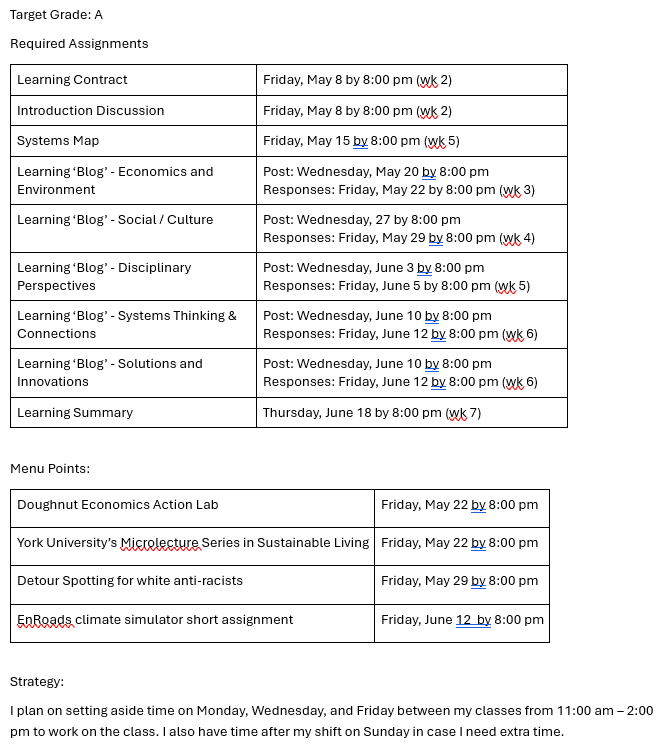
This version was useful for making sure students understood the requirements of the course but it took longer than I wanted to review the submissions because the formatting was wildly variable: some students missed including the deadlines, whereas others copied and pasted each assignment description into the document. I thought about creating a template for the students to complete, but I wondered if a Google Form might be a better choice.
In the revised version in Google Forms I combined the learning contract with a few activities intended to provide additional support for developing helpful learning related skills. Because students in the course come from different programs and years of undergraduate education, they have different experience with doing tasks like citing and referencing, effective study strategies, and estimating the amount of work the course will need; therefore, I built these topics into the learning contract. I also included a few questions to encourage them to look at the course syllabus. Here is a sample learning contract.
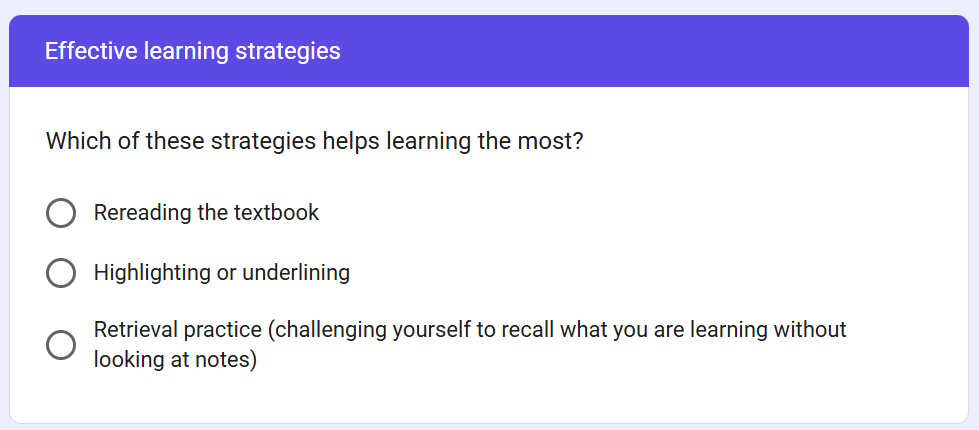
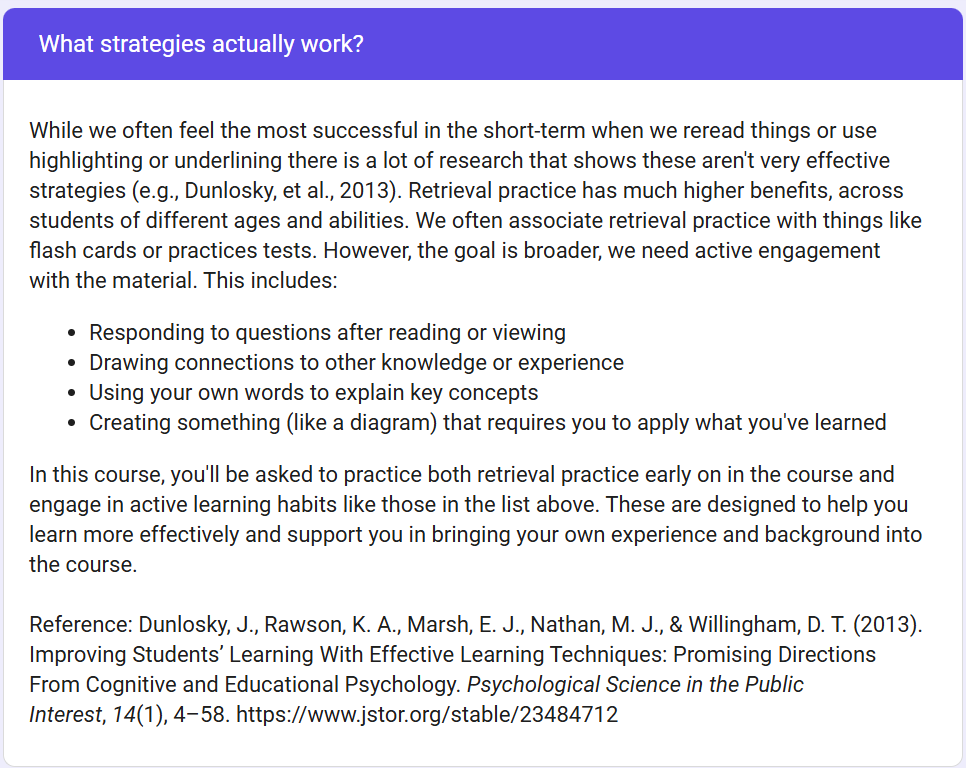
I wanted this version to help students identify where they might have misconceptions in their study approaches so I included a question and then subsequent information on effective learning strategies.
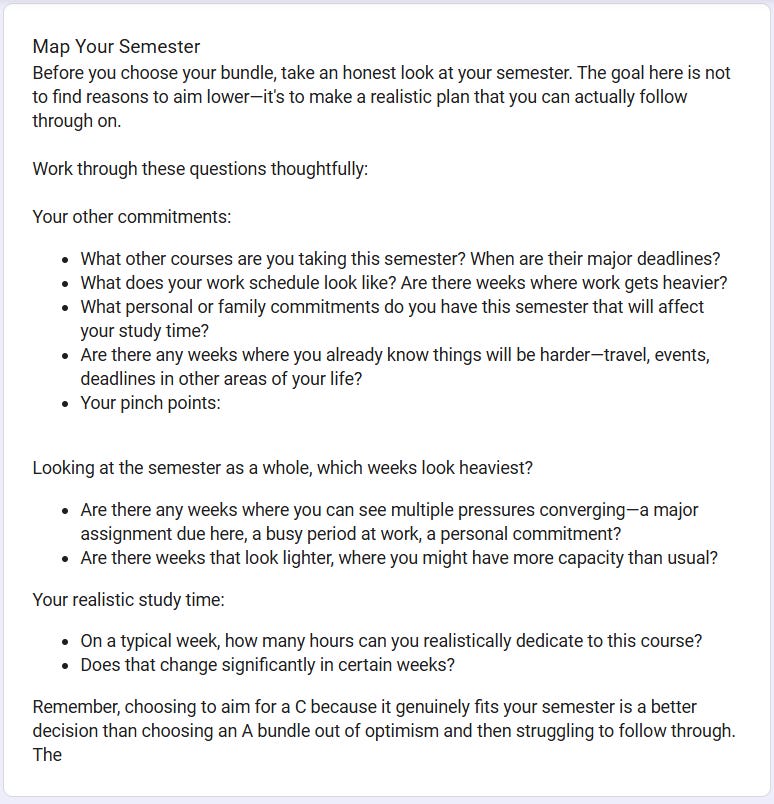
I’ve also been finding that students were struggling with time management. A frequent comment I heard was, “I didn’t realize how long this would take me.” So I wanted to start them thinking about their time management and available time early on.
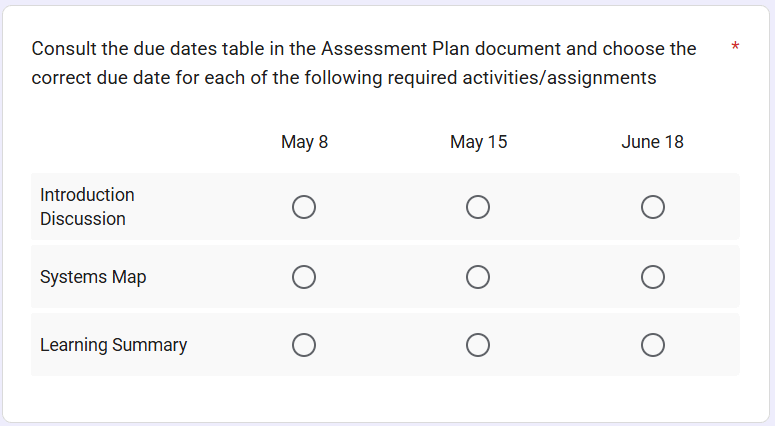
In the learning contract, each student also identifies which menu assignments they are planning on completing.
The learning contract ends with a section about asking for help and identifying where they can seek help on different topics.
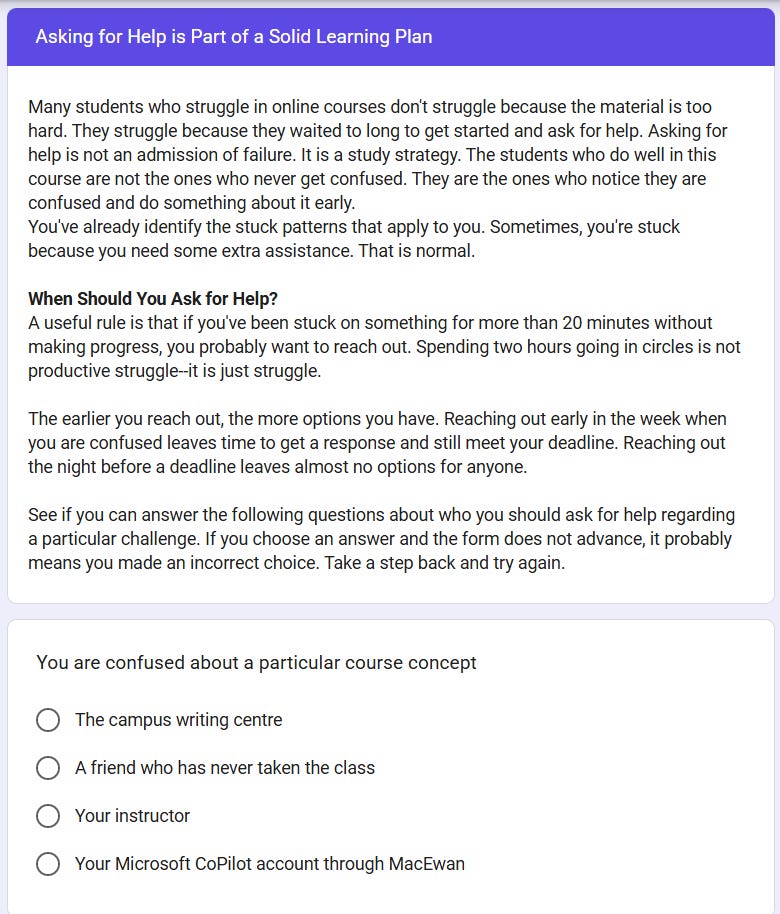
The updated version has gone beyond a learning contract. It still requires that students identify their target grade and choose the menu assignments they’re planning to complete; but now it also aims to support them in implementing general learning skills to improve their course success in this course and hopefully beyond.
Instructor Benefits
As mentioned earlier, the initial version of the learning contract had variability and students missed components or added in things they didn’t need to include. This made them harder to review. The Google Form simplified my review process because I can export all of the responses to a spreadsheet and scan through the sheet for missing information, incorrect date selections, or someone who has identified significantly more menu assignments than they need. This allows me to follow up with those students quickly to make sure that any misconceptions are addressed and they are clear on the course expectations.
I also link the spreadsheet of responses to my master grading spreadsheet, also in Google. You do this from the Responses tab in the Google Form: select “Link to Sheets,” then choose “Select existing spreadsheet.” It will then create a new tab in your chosen file.
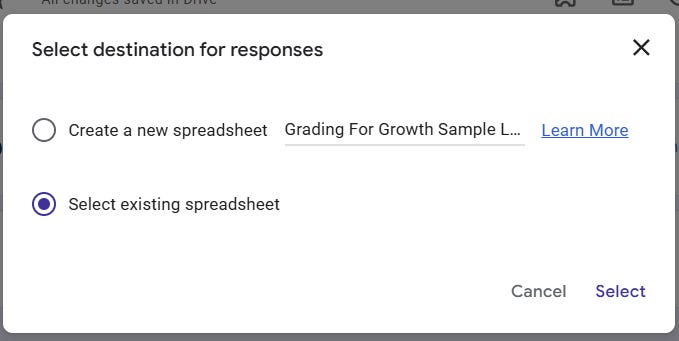
From here, I can use the vLookUp function to pull the data I want into my main spreadsheet. I pull their target grades and their chosen menu points. This makes tracking easier and saves me time because I used to enter this information manually.
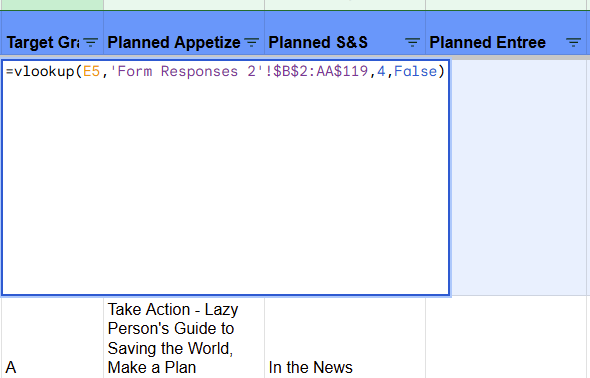
Although I have to update the formula slightly each semester as I make changes, it has streamlined some of the tracking early in the semester, freeing up my time to meet with students and respond to inquiries.
I did find that students wanted to know when I had reviewed their learning contract, so I have put a manual item into the gradebook in the LMS. I quickly go through the list and enter that the assignment is Complete. This takes less time than doing the opposite with the previous version of reviewing the assignment in the LMS and then manually entering their target grade and planned menu points into my spreadsheet.
More and more, it feels like students are struggling with executive functioning. Using specifications grading and my assessment menu both require some executive functioning. The learning contract helps to add scaffolding to planning the semester, identifying a target grade, and staying on track.
 | A guest post by
|